
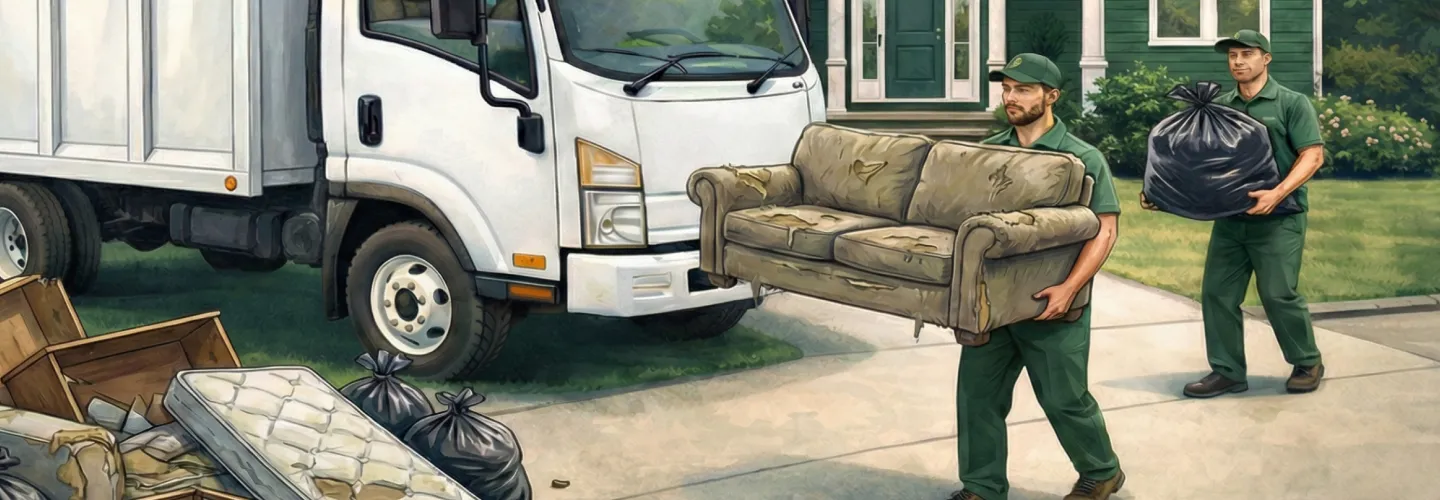
Waltham Restaurants Junk Removal Services
Choose our Restaurants Junk Removal for prompt, professional service that keeps your kitchen and dining areas spotless, compliant, and ready for business—so you can focus on serving your customers.
Get a Free QuoteOur Waltham Junk Removal Services
Restaurants Junk Removal in Waltham, MA – Local Service Guide
Restaurants in Waltham, from Moody Street’s bustling eateries to the vibrant spots near Main Street and the Charles River, face unique junk removal needs. Seasonal menu changes, renovations, and health code updates often trigger the need for swift, discreet removal of old kitchen equipment, furniture, and packaging. Local regulations require proper disposal or recycling, and many restaurants coordinate pickups to avoid disrupting service hours. In Waltham’s commercial districts, volume can be significant—especially after events or during turnover periods. Access can be challenging in historic or high-traffic areas, so planning is key. For specialty needs like construction debris or large-scale cleanouts, coordination with city guidelines and professional haulers ensures compliance and efficiency. For more on local rules and resources, visit the City of Waltham’s official website.
Key Considerations for Restaurants Junk Removal in Waltham
- Timing pickups to avoid peak dining hours and minimize disruption
- Securing necessary permits for large or curbside disposals
- Using approved disposal and recycling channels for commercial waste
- Navigating tight access in downtown or historic restaurant locations
- Managing high-volume or specialty items (e.g., kitchen equipment, bulk furniture)
- Coordinating with property managers and city schedules for efficient removal
Benefits of Restaurants Junk Removal in Waltham
Fast and Reliable Service
Eco-Friendly Disposal
Flexible Scheduling Options
Experienced Junk Removal Team
Affordable Pricing Plans
Comprehensive Cleanout Solutions
Coordinating Restaurant Junk Removal with Waltham’s Solid Waste Management Programs
Restaurant junk removal in Waltham should be planned as a business cleanout rather than as part of the residential curbside system. Furniture, shelving, kitchen equipment, cardboard, scrap material, appliances, and renovation debris all belong to different disposal streams. The most useful local starting points are Business Recycling Resources and Recycling for Businesses, because restaurant cleanouts usually involve a mix of recyclables, reusable items, and materials that should be diverted before anything is discarded.
- Restaurant cleanouts should be sorted by material type before removal begins
- Commercial junk should not be handled like ordinary household curbside trash
- Cardboard, metal, appliances, electronics, and debris may all need different outlets
- Business recycling resources are the best local planning tool for restaurant cleanouts
Waltham Public Works Department
165 Lexington Street, Waltham, MA 02452
Phone: (781) 314-3800
Official Website: Waltham Public Works Department
Proper sorting at the beginning of the project usually prevents delays later, especially when the cleanup includes both ordinary restaurant contents and regulated materials.
Understanding Waltham’s Commercial Waste Disposal Regulations for Restaurants
Restaurant waste often includes streams that require separate handling. Cardboard, bottles, cans, and other recyclables should be separated from general waste. Fats, oils, and grease are part of a Massachusetts DEP program administered locally through the Water & Sewer Division, which specifically lists FOG, fats, oils and grease among the programs it administers. If a restaurant cleanout includes appliances, electronics, or demolition material, those items move out of the normal junk-removal category and into their own disposal pathways.
For business-specific help with recyclable and reusable material streams, Waltham’s Business Recycling Resources page is more useful than treating everything as mixed trash.
Waltham Water & Sewer Division
163 Lexington Street, Waltham, MA 02452
Phone: (781) 314-3855
Official Website: Water & Sewer Division
Recycling Mandates and Material Recovery for Waltham Restaurants
Restaurants generate several waste streams that are easier to divert than to throw away. Recycling for Businesses and Business Recycling Resources are built around that idea. Cardboard, paper, bottles, cans, scrap material, and office-type recyclables should be separated instead of mixed into one load. Food waste can also be diverted: Food Waste Composting for Businesses is specifically aimed at restaurants, hotels, grocery stores, and other businesses that produce food waste, and it explains that compost pickup can reduce trash-hauling costs because food waste is one of the heaviest materials in the waste stream.
- Cardboard, paper, bottles, and cans should be separated from general junk
- Food waste diversion is available for restaurants and other food-producing businesses
- Material recovery is often more practical and less wasteful than mixed disposal
- Restaurant cleanouts benefit from separating kitchen waste, fixtures, packaging, and equipment before removal
Permit and Access Requirements for Restaurant Junk Removal in Waltham
The legal side becomes more important when a restaurant cleanout includes built-in fixtures, demolition debris, wall removal, plumbing changes, or other construction-related work. Construction Waste Disposal keeps asphalt, brick, concrete, metal, wood, drywall, toilets, and similar debris out of trash barrels and recycling carts. Building-related questions, inspection scheduling, zoning complaint enforcement, and nuisance complaint enforcement are handled through the Building Department. That distinction matters during restaurant remodels, equipment upgrades, and kitchen tear-outs, where a project may begin as junk removal but quickly become a building and demolition matter.
Building Department
119 School Street, Waltham, MA 02451
Phone: (781) 314-3275
Zoning Complaint & Enforcement: (781) 314-3287
Official Website: Building Department
Advance planning helps keep restaurant contents, recyclables, and demolition debris from being mixed together in ways that create disposal and compliance problems.
What Neighborhoods Do We Serve Throughout Waltham, MA?
- Downtown Waltham: Dense commercial corridors with limited street parking and frequent loading restrictions. Service often requires early morning scheduling and coordination with building management for elevator or loading dock access.
- South Side: Mix of older multi-family buildings and small restaurants. Narrow streets and limited alley access may require smaller removal vehicles and careful planning for bulk pickups.
- The Highlands: Predominantly residential with some commercial strips. Restaurants here benefit from wider streets and easier driveway access, but may face HOA restrictions on dumpster placement.
- Cedarwood: Suburban neighborhood with single-story restaurants and ample parking. Driveway and lot access simplifies removal, though advance notice is still required for large-scale disposals.
- Lakeview: Proximity to residential areas means noise ordinances and time-of-day restrictions apply. Coordination with the city is necessary to avoid disrupting local traffic during removal operations.
- Piety Corner: Historic district with older buildings and limited access. Special permits may be needed for removal trucks, and care must be taken to protect historic facades during junk removal.
- North Waltham: Commercial and industrial zones with larger restaurant facilities. Loading docks and wide access roads facilitate efficient removal, but compliance with commercial waste regulations is strictly enforced.
State and Federal Environmental Compliance for Restaurant Waste in Waltham
Restaurant waste in Waltham is also shaped by broader Massachusetts and federal rules. The Massachusetts Department of Environmental Protection maintains the statewide framework for disposal bans and recycling requirements, while the federal Resource Conservation and Recovery Act (RCRA) is the main federal reference point for hazardous-waste handling. For restaurant projects, those rules matter most when the cleanup includes chemical products, regulated waste, appliances, electronics, or construction debris. In practical terms, the safest approach is to separate those streams before hauling begins rather than treating the entire restaurant cleanout as one mixed load.